Boat Fuel Management for Recreational Boaters
There are two things boaters need to know about when it comes to fuel management: how to refuel, and how to gauge the right amount of fuel you need for a trip.
As always, safety must come first! Keep reading to learn what you need to know about fuel management for safe and enjoyable recreational boating in the United States.
Key Takeaways
- Refueling is dangerous, no matter how much experience you have. Follow the steps recommended by boating professionals to minimize the risk and keep yourself, your passengers, your boat and the environment safe.
- Fuel management can be tricky when various factors affect how much you burn on any given trip (including the load, the conditions, and whether your gauge is working correctly). Most boaters rely on the Rule of Thirds: one-third of the tank to go out, one-third to come back, and one-third in reserve.
Safe Boat Refueling
No matter how much boating experience you have, fueling a boat remains dangerous. Because gasoline vapors are heavier than air, they can settle in the bilge and create a real risk of explosion. Many sources suggest that anywhere from 5 to 10 percent of all boat fires are linked with fuel.
The best way to protect your passengers, your boat and the environment is to follow a step-by-step process when fueling your boat.
Step-by-step boat refueling checklist
Here is a safe refueling checklist you can print or save on your phone. Review the steps so you’re ready to refuel safely before your next boating trip.
Donwload the checklist in PFD format: Safe-boat-fueling-checklist-Drive-A-Boat-USA
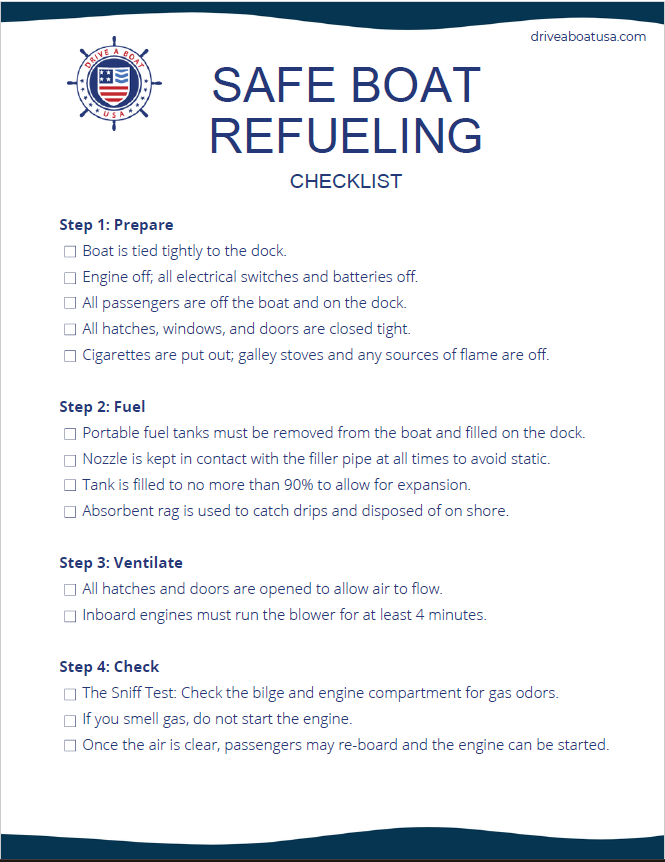
Step 1: Prepare
Boat is tied tightly to the dock.
Engine off; all electrical switches and batteries off.
All passengers are off the boat and on the dock.
All hatches, windows, and doors are closed tight.
Cigarettes are put out; galley stoves and any sources of flame are off.
Step 2: Fuel
Portable fuel tanks must be removed from the boat and filled on the dock.
Nozzle is kept in contact with the filler pipe at all times to avoid static.
Tank is filled to no more than 90% to allow for expansion.
Absorbent rag is used to catch drips and disposed of on shore.
Step 3: Ventilate
All hatches and doors are opened to allow air to flow.
Inboard engines must run the blower for at least 4 minutes.
Step 4: Check
Check the bilge and engine compartment for gas odors. Never use a bilge pump to remove spilled gasoline.
If you smell gas, do not start the engine.
Once the air is clear, passengers may re-board and the engine can be started.
How much boat fuel do you need?
Gauging how much fuel you need for a boat trip can be tricky, as there are many factors that can change how much fuel you burn.
There are three main elements to keep in mind:
- Boat fuel gauges can be unreliable. Because a boat tilts, pitches, and rolls, the fuel float inside the tank moves constantly, and you can’t be too sure you’re getting an accurate reading. Sometimes you can even see your gauge drop from half to empty in a matter of minutes once you hit choppy water.
- On a boat, heavy waves can increase fuel consumption by 30% or more, depending on the type of boat. You might think you have enough fuel, but if the wind picks up, you may come up short.
- Boaters often underestimate how much the people and gear on their boat affects their range. Even if you obey your boat’s capacity plate (which is a legal safety requirement, by the way) you can still be amazed at how much fuel it takes to power a fully loaded boat.
The Rule of Thirds
To make sure you never run dry on the water, follow the classic Rule of Thirds. This means planning to use:
- One-third of your fuel for your journey out
- One-third for your return trip
- One-third in reserve for emergencies or unexpected weather.
Get Your Boater Education Card with Drive A Boat USA
Recreational boaters need a boating education certificate, sometimes called a Boater Card, to operate a motorized vessel legally in many states. Drive A Boat USA offers 100% online, NASBLA-approved courses so you can get your American boating license quickly and easily from the comfort of your home.
All course content meets U.S. Boating Education Standards. Sign up today and get certified to take to the water in California, New York or Florida!
